
What Visiting Indigenous Land Taught Me About Climate Justice
By: Mandy Zhao
I am a first-generation college student whose parents immigrated to the United States from China. I didn't grow up traveling much. My parents worked long hours and couldn't afford the kinds of family vacations that many of my peers took, and for a long time, I saw that as a limitation in my exposure to the world.
But growing up in San Francisco and in an immigrant family had already exposed me to perspectives that challenged what I considered “normal.” I grew up around classmates balancing school with work and family responsibilities, and through my parents' experiences in China, I learned early on that things I considered basic—reliable electricity, running water, grocery stores, stable housing—were not universal.
That background shaped the way I entered Costa Rica. Before the trip, I realized that although I had traveled to other countries, I had mostly experienced them as a tourist rather than a visitor.
When I went to Europe, I stayed in hostels. I looked on TikTok for the places I was “supposed” to see. I ate Americanized versions of local food. I took pictures, checked things off my list, and moved on.
Nothing really required me to be uncomfortable.
So when I read that we would be taking a dugout canoe into Bribri territory, sleeping in cabins with mosquito netting, and living without electricity, I was nervous. The trip involved an eight-hour journey from San José followed by a canoe ride down the Yorkín River and a walk into the community. Our cabins had no electricity. For the first time, I was entering a place where I couldn't simply rely on the comforts and conveniences I was used to. And then I arrived in Yorkín.
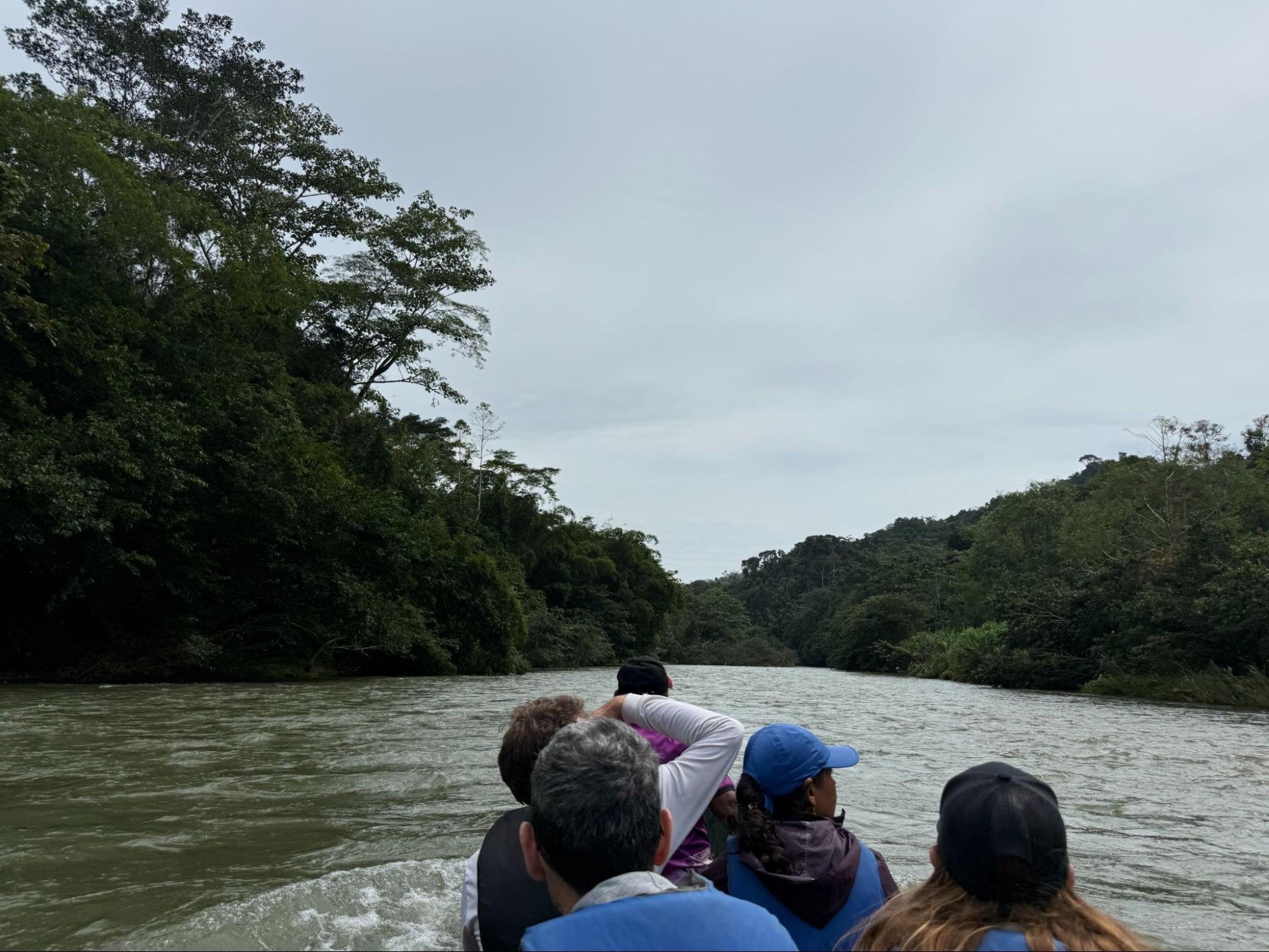
Canoe ride into Yorkín. Traveling by dugout canoe along the Yorkín River, the route into Bribri territory.
Learning to be a visitor
One of the biggest lessons I took away from Costa Rica was the difference between traveling somewhere and actually being a visitor.
Being a tourist can mean asking, What can I get out of this place? What should I see? What should I eat? What picture should I take?
Being a visitor asks something different: What can I learn from the people who already live here? What am I not understanding? And what does it mean for me to enter someone else's home respectfully?
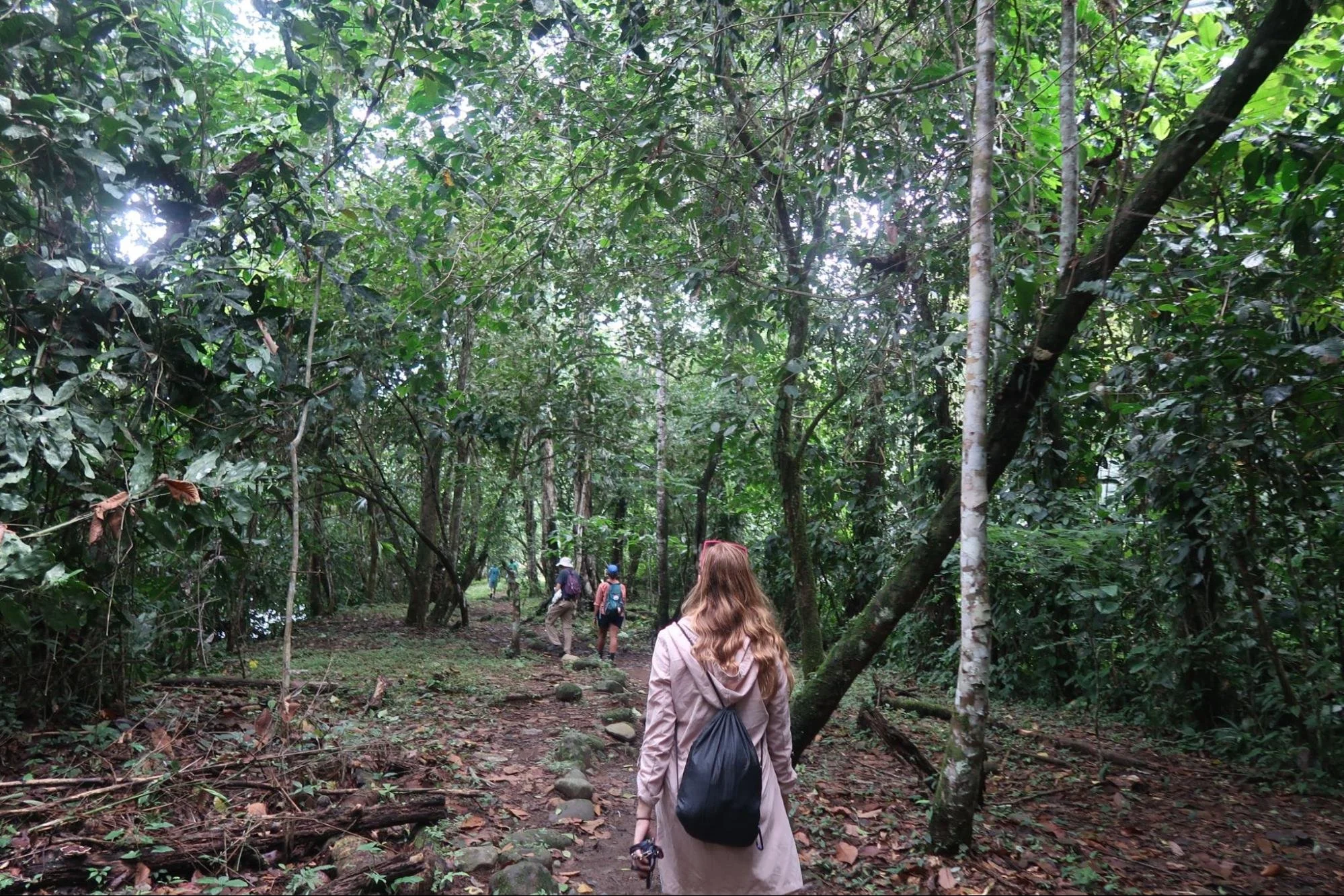
Walking through the rainforest. Hiking through the rainforest toward the Bribri community of Yorkín.
That distinction changed the way I looked at everything.
There was no electricity in our cabins. Meals were shaped by what was available and, in many ways, by what the environment allowed—a reminder that how we treat the planet eventually shapes how we live. We weren't surrounded by screens, appliances, or the constant hum of technology that I had become so accustomed to.
At first, I noticed the things that weren't there.
Then I started noticing everything that was.
The river. The rainforest. The food. The people sitting together. The knowledge being passed down. The plants that had medicinal purposes. The ways people depended on one another.
The question stopped being, How do people live with so little?
I started wondering why I had assumed that this was “less” in the first place.
What does progress actually mean?
That question followed me throughout the trip.
We talk about development as if it is always synonymous with progress: more technology, more infrastructure, more convenience, more economic growth.
But what happens when “progress” also means losing something?
The Bribri have had to navigate this tension for generations. The Stibrawpa women's organization, co-founded by Bernarda Morales, was created to protect the rainforest, strengthen Bribri culture, and support Bribri families. After economic and environmental changes pushed many people toward work on nearby banana plantations, the community began working to return to traditional foods, farming practices, cacao production, and cultural traditions.
Listening to Bernarda made me think about how easily we separate “modern” and “traditional” as if one is inherently better than the other.
Modernity can bring things that genuinely improve people's lives. Electricity can help students study. Health insurance can provide access to care. Technology can connect people across enormous distances.
But progress can also come with costs.
At one point during our visit, we could hear workers putting up power lines that would eventually bring electricity to the local high school.
I found myself thinking about my own relationship with technology.
I spend so much of my life looking at a screen. We all do.
We stare at phones while walking. We scroll while eating. We check notifications in the middle of conversations. We consume thousands of pieces of information every day, much of it completely meaningless, and somehow still feel like we don't have enough time.
In Yorkín, I experienced what it felt like to have fewer distractions.
And I realized how rarely I allow myself to simply exist.
Nature Is More Than Something We Look At
Another thing that shifted for me was the way I thought about nature.
I have always loved nature. I love hiking, mountains, beaches, forests, and being outside. But I realized that there is a difference between appreciating nature and romanticizing nature.
It is easy for someone like me to visit a rainforest for a week and think, Wow, this is so beautiful. I wish I could live like this.
But I will, at some point, leave.
The people who live there don't get to treat the rainforest as an aesthetic.
It is their home.
It determines what grows. It influences when food can be harvested. It provides medicinal plants. It shapes transportation. It can flood. It can change with the climate.
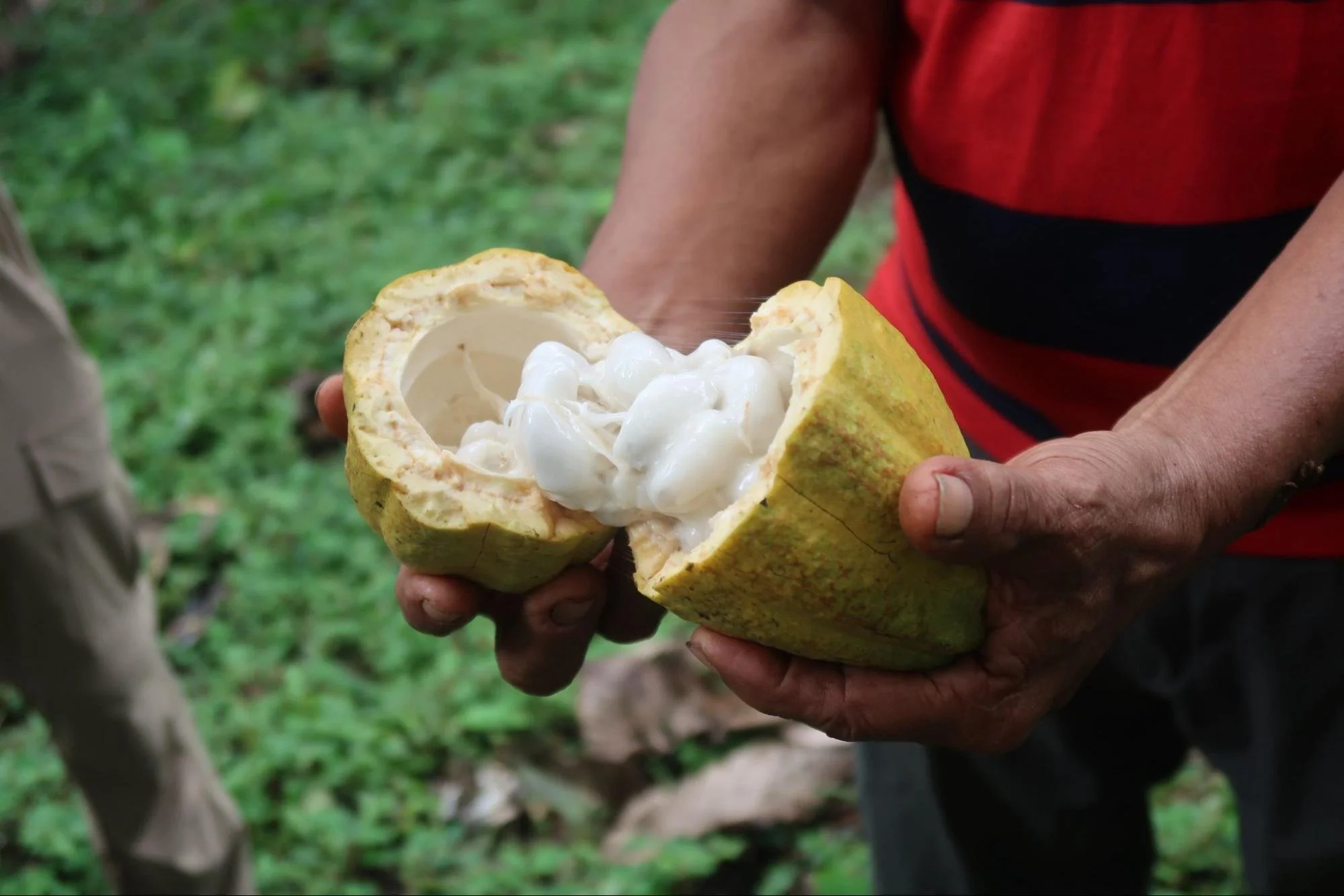
Cacao in Yorkín: Learning about cacao, a traditional crop that supports Bribri families and provides an important source of income for the community.
The Bribri are already experiencing the effects of climate change. Changes in rainfall are affecting crops, plants, bees, and harvesting seasons, while some medicinal plants have become less effective.
That made climate change feel different to me.
It wasn't an abstract graph or a statistic about global temperature.
It was someone's food.
Someone's medicine.
Someone's home.
What we lose when we stop listening
One of the most meaningful parts of the trip for me was learning about the importance of elders and oral knowledge.
The Bribri have traditionally passed language, stories, customs, values, and knowledge from generation to generation through their elders. One woman explained the difference between simply writing something down and actually living it: knowledge isn't just something that can sit on a page.
That made me think about my own family.
I grew up with immigrant parents who struggled to communicate with me in English, and I think I have underestimated how much knowledge can exist outside of the things we learn in school.
We are taught to value books, degrees, credentials, experts, and written information.
But what about the person who has spent eighty years learning from the land?
What about the grandmother who knows which plant can help with an illness?
What about the stories that never make it into a textbook?
Costa Rica reminded me that knowledge doesn't only live in higher education institutions.
Sometimes it lives in people.
And sometimes the only way to access it is to slow down enough to listen.
Leaving differently
I came to Costa Rica thinking I was going to learn about climate justice.
I did learn about climate justice. But I also learned that climate justice is about much more than carbon emissions.
It is about land.
It is about culture.
It is about who gets to decide what “development” looks like.
It is about whose knowledge gets valued.
It is about whether communities have the power to protect their homes and traditions.
And it is about recognizing that the way I live is not the default way of living.
The Bribri are not a community frozen in the past, nor should they be treated as an example of some untouched, perfect relationship with nature. They are adapting, making choices, negotiating with modern systems, and confronting the same changing world that the rest of us are. At the same time, they have fought to protect their language, traditions, community, and relationship with the land.
That complexity is what I want to carry with me.
I don't think the lesson of Costa Rica is that we should all abandon electricity, throw away our phones, or try to replicate someone else's way of life.
For me, the lesson is much simpler.
Maybe we need to question what we have been taught to call more.
Maybe we need to spend more time listening to people who have knowledge that cannot be measured by a degree or a dollar amount.
Maybe we need to stop treating nature as somewhere we go when we need a break from our “real” lives and start understanding that we are part of it.
And maybe, sometimes, the most important thing we can do when entering someone else's home is not to arrive as a tourist looking for an experience, but as a visitor willing to listen.
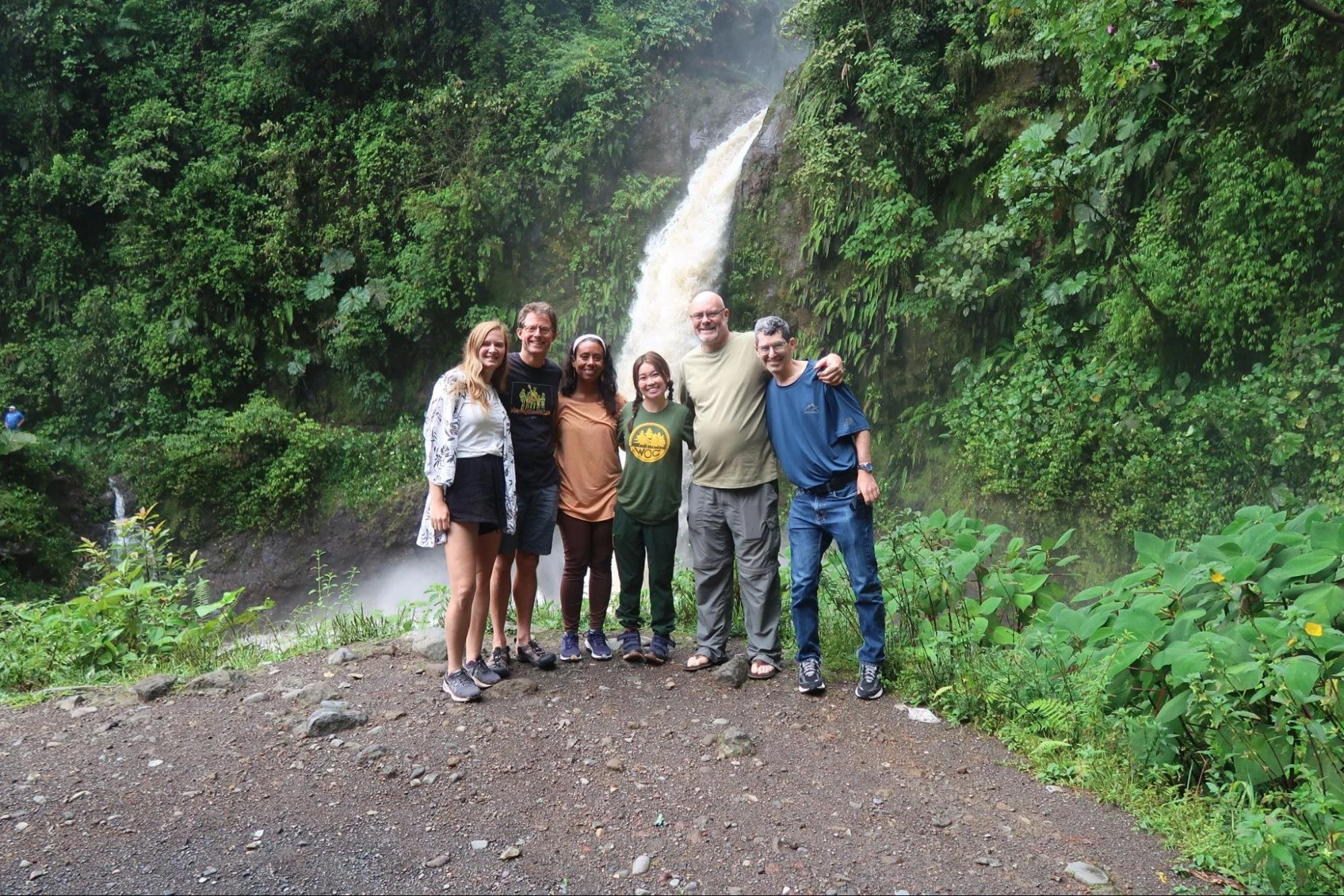
Our retreat community: Our Teach for Climate Justice group gathered together overlooking a waterfall in Costa Rica.
